
An actuator is what turns supplied energy into the physical motion a robot performs, much as muscles do for the body. This article covers what an actuator is, how an electric actuator converts electrical energy into usable torque through its internal motor and reducer, and why the Bonsystems BCSA series applies a pinless cycloidal reduction structure to keep that drive unit slim.
Contents
Anyone interested in robot development has likely come across the term actuator. Just as the word “actuate” suggests, an actuator is the driving component that makes a robot physically move. Much like muscles allow the human body to move, actuators play an equally essential role for robots.
The basic principle behind an actuator is converting externally supplied energy into mechanical motion. Actuators are typically installed in a robot’s joints or wheel drives, generating the force needed for operation and enabling everything from lifting an arm to driving and changing direction.
Actuators can be powered by a range of energy sources, not just electricity. In this piece, we’ll briefly cover the types of actuators and how they work, then take a closer look at electric actuators, which are widely used in robotics.

Actuator Types By Energy Source
Beyond electric power, actuators can also run on hydraulic or pneumatic systems. Hydraulic actuators apply pressure to oil and convert that hydraulic pressure into mechanical force. Pneumatic actuators generate force using air pressure, and their relatively simple structure makes them common in automated equipment and production lines.
Electric actuators generate force using electrical energy. Because they use an internal motor and reducer to achieve the right speed and torque, they’re widely used in the drive components of robots and automated equipment.
How Electric Actuators Work
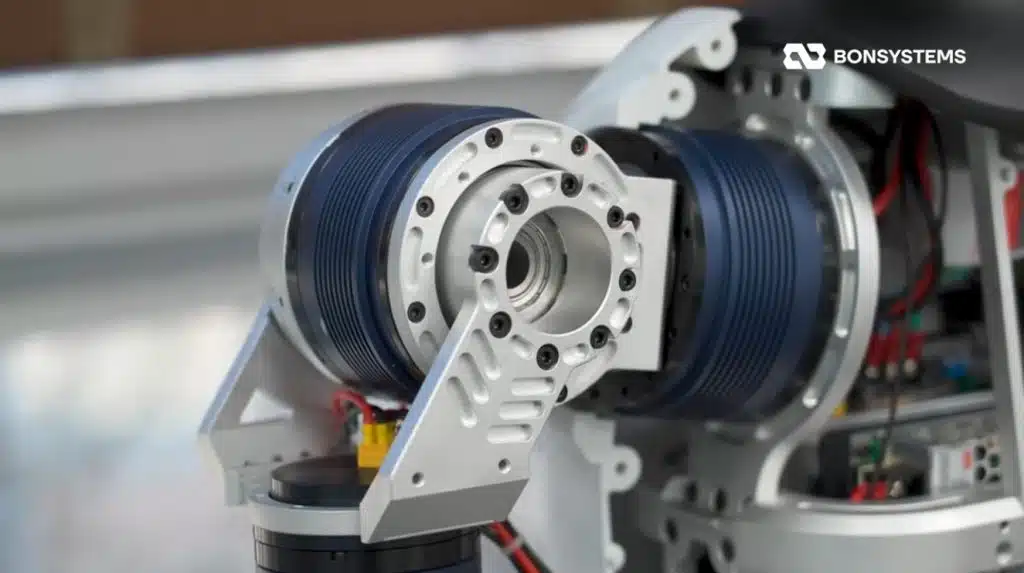
Let’s take a closer look at electric actuators specifically. Their operating principle centers on converting electrical energy into actual motion. When electrical energy is supplied, the internal motor rotates. The fast rotational force generated by the motor then passes through a reducer, which converts it into usable torque. This resulting driving force is transmitted to the robot’s joints or wheels, producing real movement such as rotation or linear motion.
Electric actuators are so widely used in robotics largely because of how easy they are to power and control. Since they run on electricity, the power supply process is relatively simple, and there’s no need for separate fluid or air compression equipment, which simplifies the overall drive system.
They can also be linked to computers or control programs to adjust the motor’s rotational speed, position, and torque, allowing accurate control over a robot’s movements. This makes them especially useful for assembly robots that need to place components in exact positions, or inspection equipment where motion stability is critical.
Why The BCSA Actuator Suits A Wide Range Of Robot Applications
The BCSA series applies this same electric actuator principle and stands out for delivering strong torque even within a slim structure. A bulky actuator can limit how internal space is used and constrain equipment design, so compact size is essential for applications with limited space. At the same time, delivering strong torque output usually requires the internal motor and reducer to meet a certain performance threshold, which tends to increase the overall size of the drive unit.
To address this challenge, the BCSA actuator adopts a pinless cycloidal reduction structure. The benefits of this design fall into two main areas: load distribution enabled by the cycloidal tooth profile, and the simplified, slimmer structure made possible by the pinless design.
First, the cycloidal reduction structure distributes load across the tooth contact surfaces. As the cycloidal tooth profile rotates along its cycloidal path in a rolling motion, the resulting impact and load are spread broadly across the gear rather than concentrated in one area. This load distribution reduces stress on individual components, supporting long term durability and product reliability.


The pinless design further improves structural efficiency. By reducing the roller pins and related parts used in pin-type configurations, it simplifies the configuration of the reduction unit. This reduces the number of parts and assembly steps, improving production efficiency while also reducing the actuator’s axial thickness. This slim structure allows for flexible placement even inside robots with limited installation space.
Fewer components also mean a simpler assembly process. This improves ease of work and reduces the assembly errors that can occur when joining parts together. It also makes it easier to manage variation between units, helping maintain consistent quality, an important factor for production efficiency and quality stability in mass manufacturing environments.
Through its pinless cycloidal structure, the BCSA series is an electric actuator solution suited to a wide range of robot platforms, from robots requiring accurate motion to those constrained by limited design space.
Bonsystems specializes in developing robot actuators and offers drive solutions suited to each customer’s design requirements. If you have any questions about the BCSA actuator or need detailed technical materials, please feel free to reach out through Bonsystems’ website.

F.A.Q
Q: What role does an actuator play in a robot?
A: An actuator is the core drive component that converts externally supplied energy into physical motion. Installed in a robot’s joints or wheel drives, it enables rotational and linear movement, and because actuator performance closely affects a robot’s range of motion and stability, it’s a critical factor to consider during design.
Q: What energy sources can actuators run on?
A: Hydraulic actuators use oil pressure, pneumatic actuators use air pressure, and electric actuators generate driving force using electrical energy. The electric approach doesn’t require separate fluid or pneumatic equipment and is easy to integrate with electronic controls, which is why it’s so widely used in robotics.
Q: How does an electric actuator work?
A: An electric actuator converts the motor’s rotational motion into the driving force a robot needs. The reducer adjusts the motor’s fast rotation into an appropriate speed and torque, and this driving force is then transmitted through the output shaft, moving the robot’s joints or wheels.
Q: Where are electric actuators typically installed in a robot?
A: They are most often applied at the joints of a robotic arm and in wheel drive units. In both cases the actuator sits alongside sensors, wiring, and control components, so its size and shape affect how the surrounding structure can be laid out.
Q: What advantage does the BCSA actuator’s pinless structure offer for robot design?
A: The pinless cycloidal structure simplifies the overall design by reducing parts such as roller pins. This helps reduce the actuator’s axial thickness and simplifies the assembly process, contributing to improved production efficiency and more consistent quality.
