
Table of Contents
- Essential Drive Components for Robot Development
- BON SYSTEMS BSR Cycloidal Reducers
- From Reducers to Actuators: The BCSA Series
- FAQ
BON SYSTEMS: Robot Drive Solutions from Cycloidal Reducers to Actuators
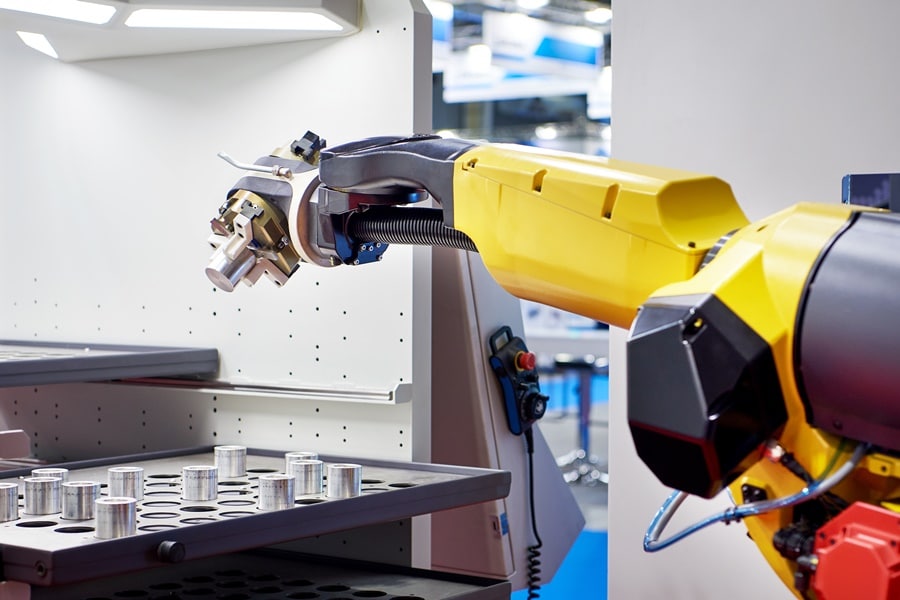
Robots are complex systems that combine software and hardware. Software enables robots to perceive their surroundings, make decisions, and control movements, while hardware translates those commands into physical motion. Robotic hardware consists of more than frames and external structures. It includes motors, reducers, encoders, brakes, and various mechanical components and drive systems responsible for transmitting power and moving joints.
Historically, the robotics market developed primarily around industrial robots used in manufacturing environments such as automotive production lines. Today, however, robot designs and applications are expanding rapidly. These include collaborative robots operating alongside workers, AGVs and AMRs navigating logistics centers, service robots used in food service and facility management, mobile manipulators combining mobile platforms with robotic arms, and humanoid robots with human-like body structures.
As robot applications become more diverse, the requirements engineers must consider during development are also becoming more specialized. The appropriate drive mechanism depends on factors such as robot dimensions, weight, required torque, installation space, and joint configuration. As a result, designing and selecting robot drive components has become an essential part of robot development.
BON SYSTEMS develops and supplies cycloidal reducers and actuators to address these requirements. Based on its proprietary cycloidal reducer technology, the company continues to expand its product portfolio from standalone reducers to integrated actuators designed for robotic joints.
Essential Drive Components for Robot Development
Whether a robot moves by rotating its wheels or operates the joints in its arms and legs, it requires a drive system that transfers power generated by a motor into physical movement.
Robot drive systems incorporate various components, including motors, reducers, encoders, brakes, and controllers. Each component performs a different function in producing and managing robotic motion.
A motor converts electrical energy into rotational motion. However, the rotational speed and torque generated by a motor are often unsuitable for direct use at robotic joints.
To lift objects or move joints, the motor's output must be adapted to the required speed and torque. This is where reducers are used. A reducer decreases the motor's rotational speed while transmitting the torque required by a robotic joint or rotating shaft.
In addition to motors and reducers, robotic joints may contain encoders that measure rotational position, brakes that hold the joint when required, and wiring and controllers connecting the various components.
Therefore, robot drive system design must consider more than torque requirements. Engineers must also evaluate component dimensions, weight, available installation space, cable routing, and assembly structures.
This is particularly important for robots with multiple joints, as each joint may require a different torque capacity and drive component size.
For example, joints installed in relatively confined spaces, such as the arms and wrists, have different requirements from joints in the lower body that support heavier loads. Selecting the appropriate drive components according to the robot's mechanical structure and operating environment is therefore essential.
BON SYSTEMS BSR Cycloidal Reducers
When developing robot drive systems, engineers must consider not only reducer performance but also the space it occupies. Motors, encoders, brakes, cables, and other components must often be installed within the same joint assembly.
The BSR cycloidal reducer series features a slim design developed with these space constraints in mind. It is available in various sizes and reduction ratios to accommodate different robot dimensions and joint torque requirements.
This allows engineers to select a suitable reducer based on thickness, outer diameter, output requirements, and the mechanical configuration of the joint.
Internal cable routing is another important consideration in robotic design. As the number of joints increases, power cables, communication lines, and sensor wiring must pass through increasingly complex internal structures.
Exposed wiring can interfere with joint movements and affect the robot's external design.
The BSR series features a hollow-shaft configuration that allows cables and wiring to pass through the center of the reducer. By using the central opening as a cable routing path, engineers can organize internal wiring within multi-joint robotic structures.
Selected models, including the BSR 070 and BSR 080, incorporate BON SYSTEMS' proprietary Pinless mechanism.
This design modifies certain components of the conventional cycloidal reduction mechanism, reducing the number of parts and assembly elements.
Rather than being designed for a single robot type, the BSR series offers a range of specifications that can be selected according to joint dimensions, torque requirements, and available installation space.
These reducers can be used in robotic joints and rotational drive shafts across various applications, including industrial robots, collaborative robots, logistics robots such as AGVs and AMRs, service robots, and other multi-joint robotic systems.
From Reducers to Actuators: The BCSA Series
When designing robotic joints, selecting reducers and motors separately allows engineers to configure a drive system according to the robot's mechanical structure and performance requirements.
However, using separate components also requires engineers to design the connections between them, allocate installation space, route wiring, and develop the surrounding housing structure.
For robots with multiple joints, the process of selecting and integrating these components must be repeated for each joint.
For this reason, modern robot development increasingly makes use of integrated actuators that combine major drive components, such as reducers and motors, into a single module.
BON SYSTEMS is developing its BCSA actuator series by integrating its BSR cycloidal reducers with motors and other components required for robotic motion.
Unlike standalone reducer installations, these actuators provide integrated drive modules that engineers can use as the basis for robotic joint design.
Using actuators can reduce some of the work involved in separately selecting and integrating motors and reducers.
Instead of designing the dimensions and mechanical connections of individual components from the beginning, engineers can design robotic joints around the dimensions and output specifications of an actuator.
This approach can be applied to collaborative robots, mobile manipulators, humanoid robots, and other systems that incorporate multiple joints.
By using standardized drive modules for joint assemblies, engineers can organize the robot's overall mechanical design and component configuration more systematically.
Even within a single robot, not all joints have identical requirements.
The required torque and dimensions vary depending on whether an actuator is installed in the upper body, arms, or lower body. Accordingly, the BCSA series includes multiple sizes and configurations to accommodate different joint structures and load conditions.
BCSA actuators can be used in a wide range of multi-joint robotic applications, including collaborative robots, service robots, mobile manipulators that combine robotic arms with mobile platforms, and humanoid robots with numerous closely arranged joints.
Expanding the Product Portfolio Through Robot Drive Technology
As robot designs and operating environments become increasingly diverse, drive system requirements are becoming more specialized.
Small joints require compact drive components that can fit within limited installation spaces, while joints supporting heavy loads need mechanisms capable of transmitting the appropriate torque.
Based on its proprietary cycloidal reducer technology, BON SYSTEMS continues to expand its portfolio of BSR reducers, BCSA actuators, and ultra-compact robotic drive components.
If you are looking for drive components suited to your robot's joint structure and operating environment, visit the BON SYSTEMS website to explore the specifications and product lineup of the BSR cycloidal reducers and BCSA actuators.
FAQ
Q. Why are reducers necessary in robot development?
Motors generally operate at relatively high rotational speeds, while robotic joints often need to transmit the required torque at lower speeds. Reducers decrease motor speed and adjust the torque delivered to the joint, allowing robots to lift objects and perform joint movements. When selecting a reducer, engineers should consider the required joint torque, rotational speed, installation space, and repetitive operating conditions.
Q. What should engineers consider when selecting a reducer for a robot?
The first step is to determine the required torque and reduction ratio for the joint. Engineers should then examine the reducer's outer diameter, thickness, weight, output configuration, and mounting method to confirm that it can be installed within the joint.
Because motors, encoders, brakes, and cables are often installed together, the mechanical interface with surrounding components is just as important as the reducer's dimensions. For robots with multiple joints, reducer selection should account for the different load and space requirements of each joint.
Q. What is the difference between a reducer and an actuator?
A reducer is a mechanical component that converts motor rotation into the required rotational speed and torque. An actuator, on the other hand, combines multiple components required for motion, including a motor and reducer, into an integrated drive unit.
Q. Can the same reducer or actuator be used in every joint of a robot?
Not necessarily. Even within the same robot, individual joints perform different functions and experience different loads, making it difficult to use identical drive components throughout the entire system.
For example, compact dimensions and low weight are important for joints near the wrist or end of an arm, while joints in the shoulders, waist, and lower body may require higher torque to support heavier loads.
Engineers should therefore evaluate the torque, dimensions, weight, range of motion, and installation requirements of each joint before selecting an appropriate reducer or actuator.